Guided breathing: Box, 4-7-8, Wim Hof, and more
How five proven breathing techniques work — box breathing, 4-7-8, the physiological sigh, Wim Hof, and coherent breathing — and when to use each one.
Breathing is the one lever on your nervous system you can pull anytime, anywhere, for free. Slow it down and your heart rate follows; lengthen the exhale and your body reads it as a safety signal. A few minutes of structured breathing can take you from wired to calm, or from groggy to switched on, faster than almost anything else.
JustGains includes a guided Breath Work tool with five techniques. Each one is a different pattern of inhales, holds, and exhales, and each is good at a different job. Here is what they do and when to reach for them.
The five techniques
| Technique | Pattern | Best for |
|---|---|---|
| Box Breathing | In 4 · hold 4 · out 4 · hold 4 | Calm focus under pressure |
| 4-7-8 Relax | In 4 · hold 7 · out 8 | Winding down toward sleep |
| Physiological Sigh | Deep inhale · top-up inhale · long exhale | Fast stress reset |
| Wim Hof | 30 power breaths · hold empty · recovery hold | Energy and breath-hold practice |
| Coherent 5.5 | In 5.5 · out 5.5 | Daily balance and heart-rate variability |
Box breathing uses four equal counts: inhale, hold, exhale, hold. The evenness is the point — it gives a racing mind a simple rhythm to lock onto, which is why it is a favourite of Navy SEALs for staying composed under pressure. Use it before a heavy set, a hard conversation, or any moment you want steady nerves.
4-7-8 stacks the deck toward relaxation: a short inhale, a long hold, and an even longer exhale. The extended exhale is what slows the nervous system down, which makes this the go-to pattern before bed or when anxiety is running high.
The physiological sigh is the fastest reset on the list: one deep inhale, a small top-up sip of air at the top, then a long, slow exhale. The double inhale pops open collapsed air sacs in the lungs so the exhale can offload more CO₂. Popularized by neuroscientist Andrew Huberman, a few cycles is often enough to blunt a stress spike in under a minute.
Wim Hof rounds are the intense one: 30 deep, rhythmic power breaths, then exhale everything and hold on empty lungs for as long as is comfortable, followed by a recovery breath held for around 15 seconds. People use it to feel energized and to train breath-hold tolerance. It is the one technique here with real safety rules — see the note below.
Coherent 5.5 is smooth, even breathing with no holds — about five and a half seconds in, five and a half out, roughly 5.5 breaths per minute. That pace is where heart-rate variability tends to peak for most people, making it the best pick for an everyday practice of relaxed, balanced focus.
Using the Breath Work tool
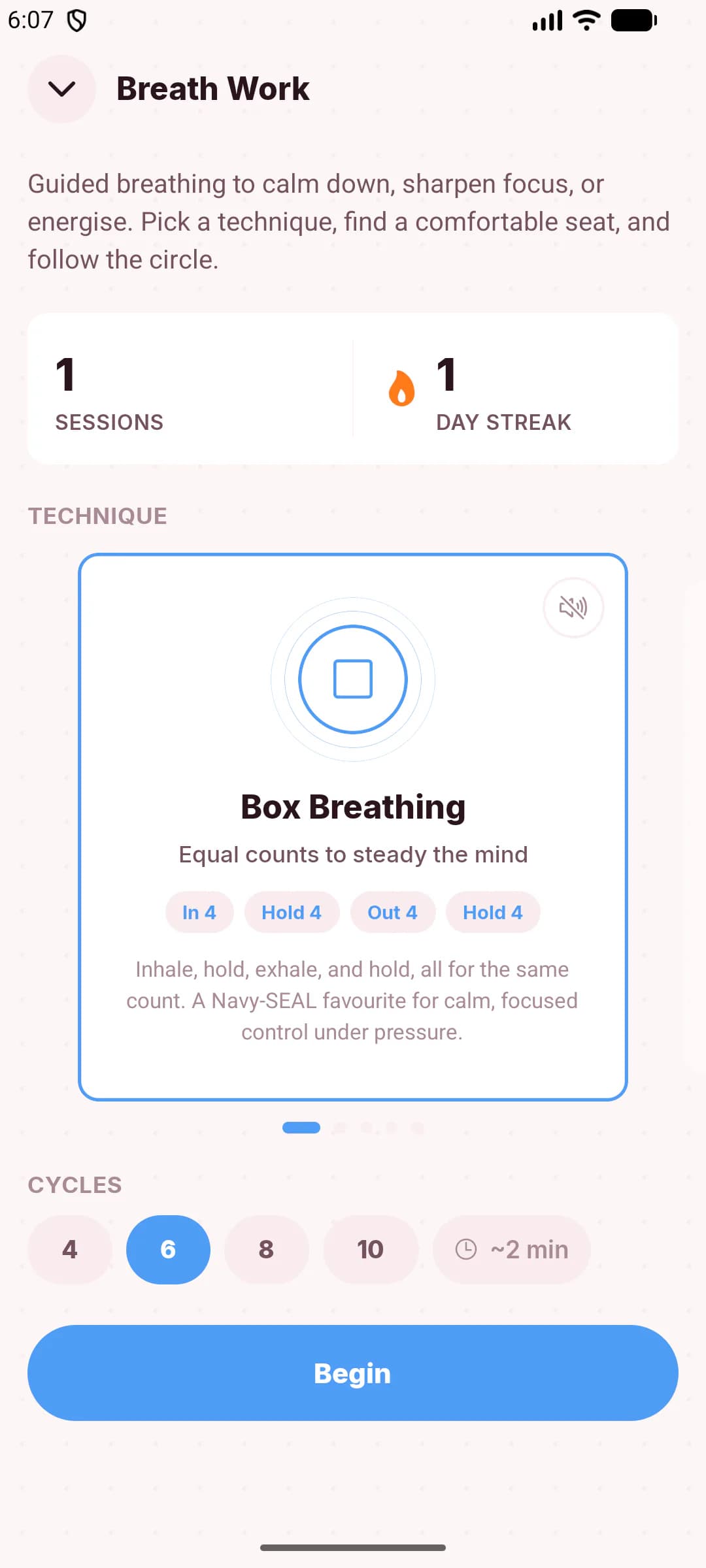
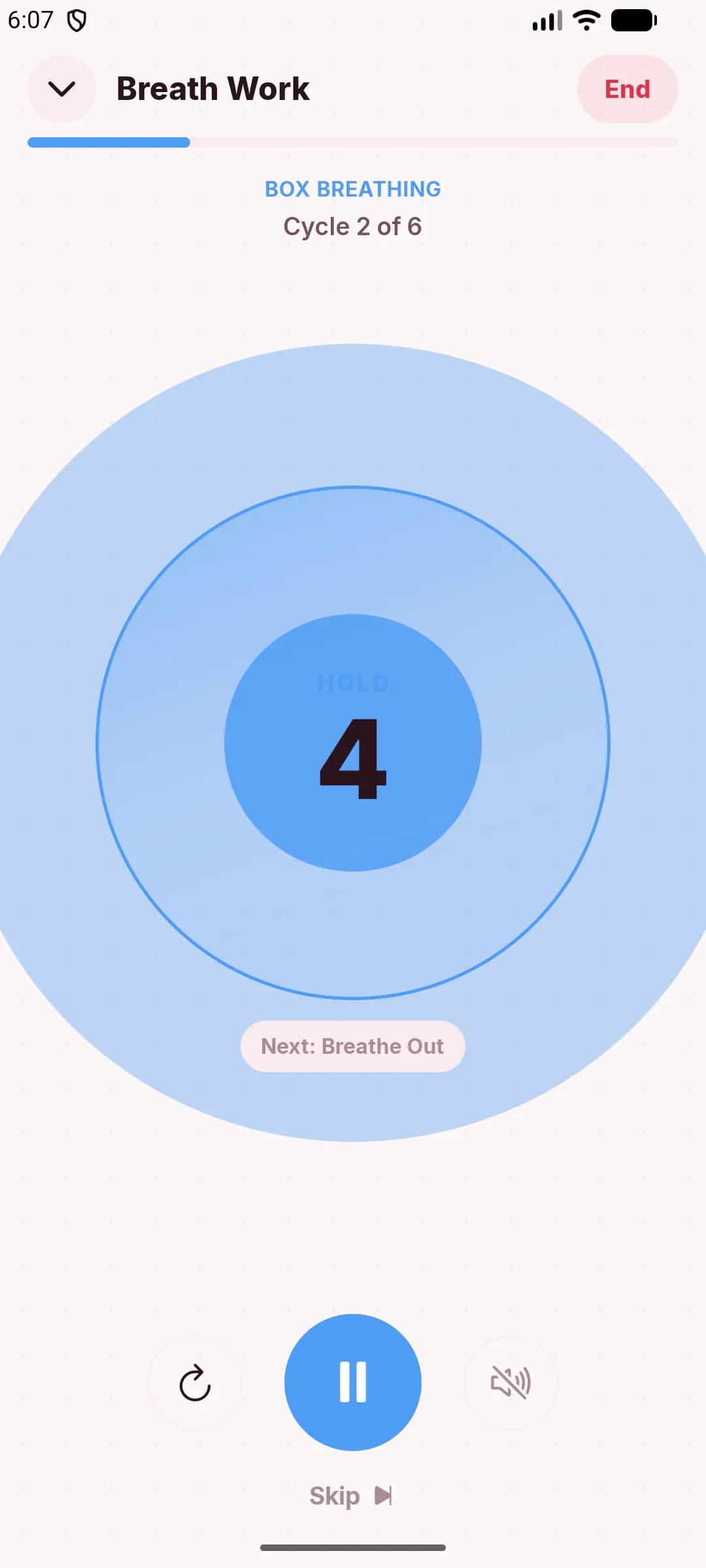
Pick a technique, choose how many cycles or rounds you want (the tool shows a time estimate), and press Begin. The circle does the coaching: breathe in as it expands, out as it contracts, hold when it holds. Gentle haptic and sound cues mark each phase change so you can close your eyes, and during a Wim Hof retention the timer counts up until you tap to breathe again.
When to slot breathing into training
- Before training: a couple of box cycles settles pre-workout jitters without dulling you.
- After training: coherent breathing helps flip you out of fight-or-flight and into recovery mode.
- Before bed: 4-7-8 is the classic wind-down, and sleep is where the actual muscle repair happens.
- Mid-stress: one or two physiological sighs, any time, no setup needed.
FAQ
Keep learning
How long do muscles take to recover?
The 48 to 72 hour rule is a useful starting point, but recovery depends on context.
DOMS explained
Delayed onset muscle soreness is common after new or hard training, but it is not a growth signal.
What is a deload?
A deload is a planned easier stretch that helps fatigue drop while you keep training.